
Lighting a Dressing Table with the NAVADO Sophia Mirror
Try placing one shaded wall light on either side of the dressing-table mirror. Sit down before marking out the fittings. In a British bedroom alcove or a European apartment, the chair and the clear glass tell you more about where the light belongs than the centre of the wall does.
The NAVADO Sophia dressing-table mirror measures 60 × 80 cm overall. NAVADO’s catalogue describes a hand-bevelled, hand-assembled frame in tea-tinted mirror glass, with a 5 cm middle band, two 2 cm borders and mitred corners. The three NAVADO catalogue images are styling illustrations.
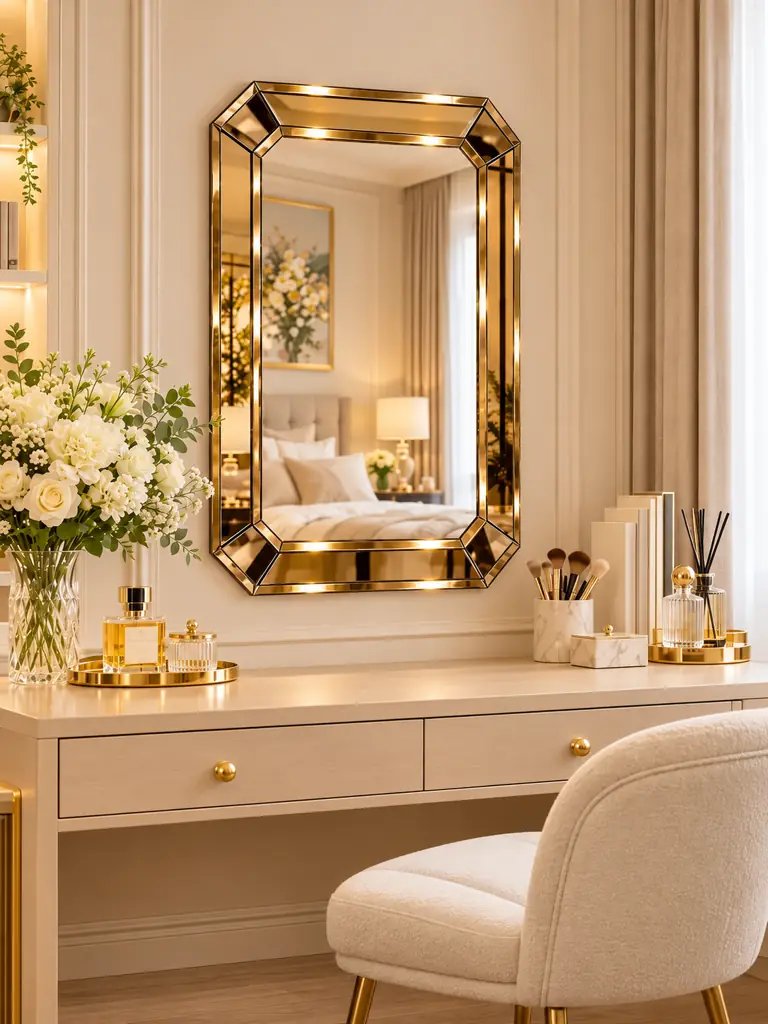
Set the height from the chair
Mark the full outline on the wall with removable tape. Put the chair where it will actually sit and check that your face falls comfortably within the central glass. The 60 × 80 cm measurement includes the decorative border, so use the clear viewing area when deciding how high to hang it. Check from a standing position too if the table serves as a spot for a last look before leaving.
Leave enough space below the mirror for the objects you use every day. A tall bottle or vase can look unobtrusive from the doorway and still obscure the lower reflection when you sit down. Move taller pieces towards the ends of the table and check the view again.
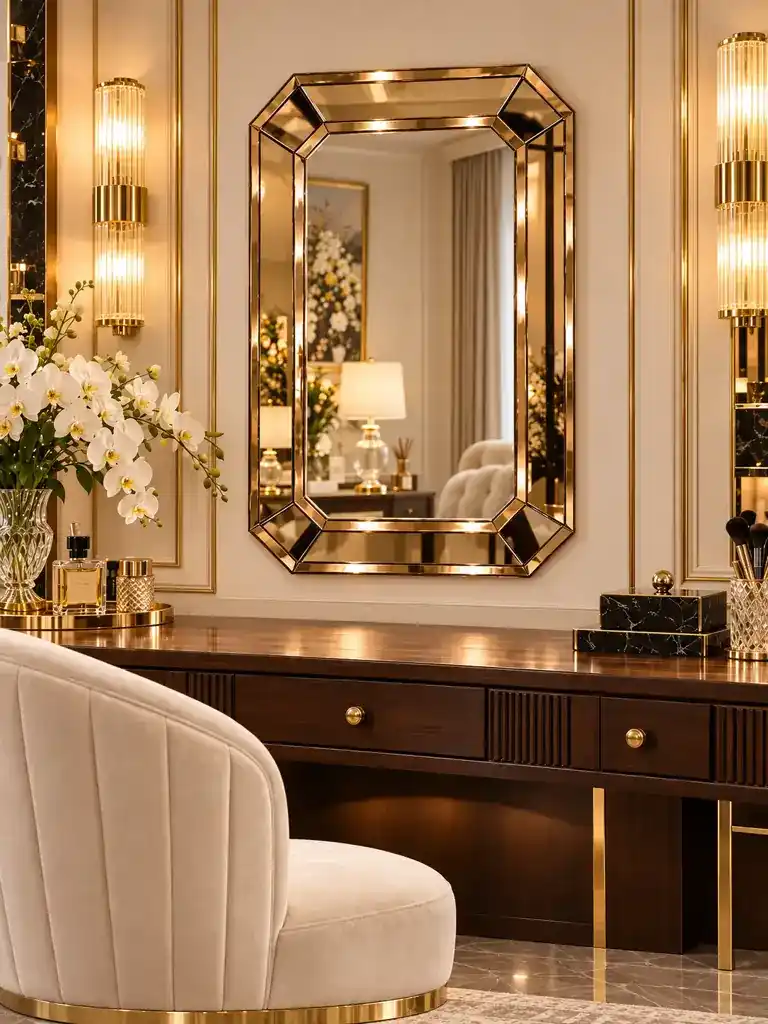
Balance light across the face
Test two shaded fittings at roughly the same height, one on each side, with the light centred around seated face height as a starting point. Compare the result with each light on separately. Two sources can soften shadows under the eyes and along the nose. If a bright bulb appears in the glass, try moving the fitting sideways or choosing a shade that conceals the bulb from your seated position.
Repeat the check after dark. A nearby window may balance one side of the face during the day. In the evening, the pair of fittings needs to do that work on its own.
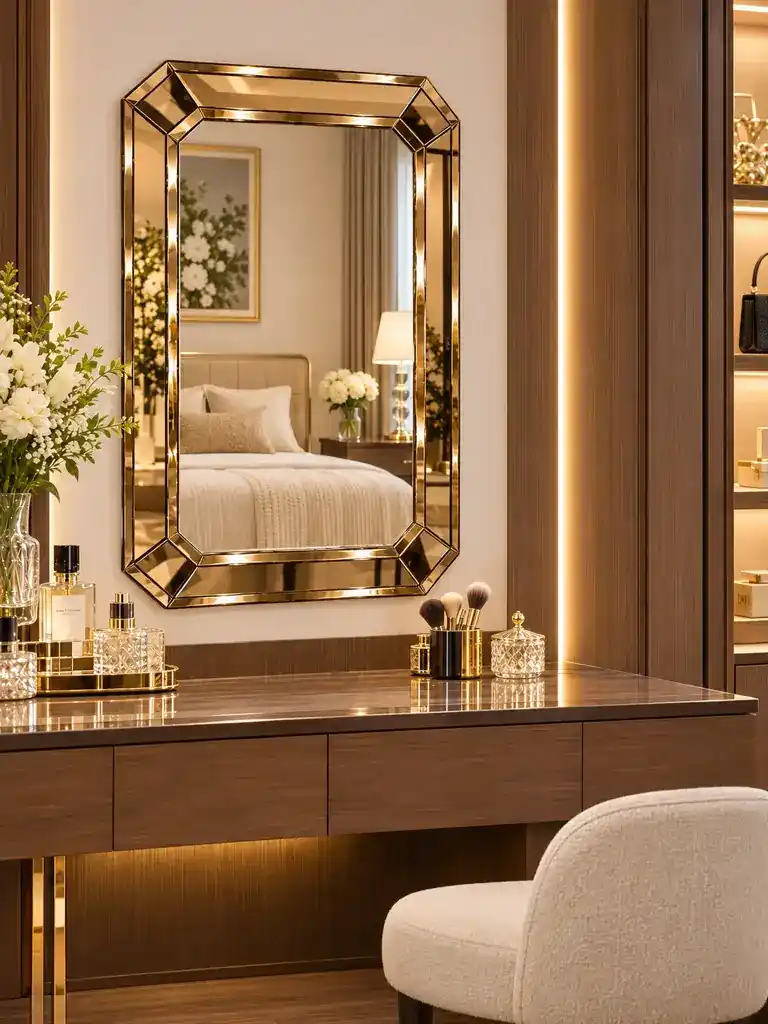
Follow the bevels around the corners
A bevel catches light at a different angle from the flat glass. Look at the border from the chair and then from the doorway. The broader bronze-toned band reads as a surface, while the narrower edges give it definition. At a mitred corner, the adjoining pieces must meet at the intended angle so that the lines continue neatly around the turn. That alignment is where the maker’s work is easiest to see.
Before choosing the fittings, put your shade, wall finish and timber samples beside the Sophia finish reference. Take a photo from the chair and another from the doorway. Use the first to judge the light on your face and the second to judge how the frame sits within the room.