
A Considered Dressing Corner: NAVADO Round Shield in a Hotel Bedroom
Give a hotel bedroom a proper dressing position: a tall mirror beside the wardrobe, a clear place to stand and a calm reflection behind the guest. In a British townhouse hotel or a European city guest room, this can make a narrow strip of wall both useful and visually considered.
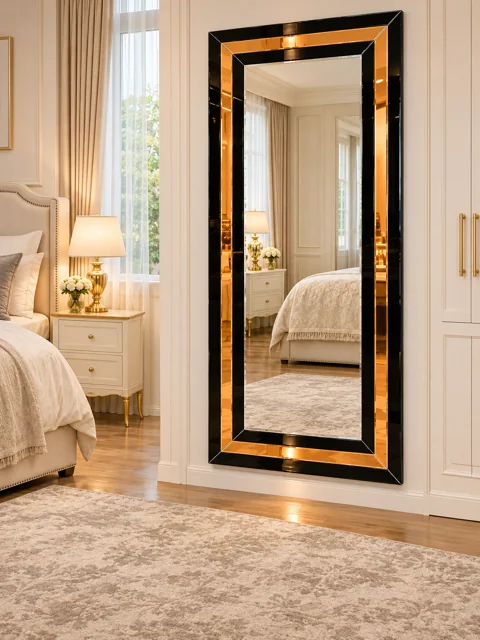
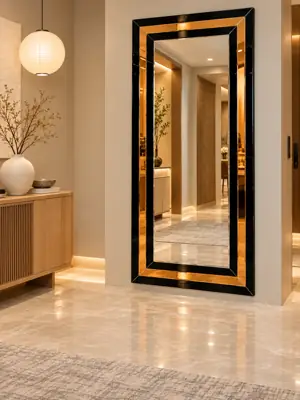
The NAVADO Round Shield full-length mirror offers a strong starting point. NAVADO describes a wall-mounted design with three bands of mirror glass, black–tea-tinted–black, and corners joined at 45 degrees. Its upright rectangular frame sets a different rhythm from a round bedside lamp or a soft upholstered chair. The three images below are NAVADO styling illustrations, used here to explore a proposed hotel scheme.
Start with the standing position
Place a paper outline on the wall beside the wardrobe and mark the floor position from which a guest would use it. Open the wardrobe doors, pull out a suitcase stand and check the route from the bed to the bathroom. The dressing position needs to work with those everyday movements. A visually balanced mirror is less useful if the guest has to stand in an open doorway to see an outfit.
Test the reflective area with people of different heights before deciding where its lower edge belongs. The decorative frame occupies part of the overall outline, so ask for a drawing that distinguishes the clear viewing area from the finished outside dimensions. Agree the size for the actual room rather than treating the proportions in a styling image as a measured installation.
Use the glass colours to connect the furnishings
Round Shield’s darker outer and inner bands contain the warmer tea-tinted strip between them. Repeat one of those tones in a modest detail, such as dark wardrobe handles or a warm timber luggage bench. Let the bedding and wall remain quieter so the frame keeps its definition. The result can feel composed without requiring every fitting to share the same finish.

Compare a glass finish sample with the wardrobe, wall and fabric samples in the room. A bronze-toned reflection may appear warmer beside pale stone and more restrained beside dark timber. Look at the sample with the room lights on as well as in daylight; the colour shown on a screen cannot settle that choice.
Read the maker’s skill at the corners
The frame is built from separate glass strips. At each 45-degree join, the three bands have to turn the corner together. The skill lies in keeping their widths visually even, the joints orderly and the rectangular outline true. That continuity gives a restrained design its sense of finish: a guest sees the whole frame first, then notices the meeting lines at close range.
Hand-ground edges introduce another scale of detail. A sloping polished edge catches a different reflection from the flat face, creating a fine highlight as the viewpoint changes. When reviewing the chosen specification, ask to see an edge and corner sample together. Confirm the proposed bevel profile and width with NAVADO rather than assuming that the photograph establishes those measurements. This is how the craftsmanship becomes part of the design brief.
Check the view after dark
Stand at the intended dressing position with the bedside and wardrobe lights switched on. A bare lamp reflected at eye level can dominate an otherwise quiet composition. Try a shaded fitting, or adjust the relationship between the light and mirror before fixing either. Also check the view from the bed: a wardrobe front or softly lit wall may be a calmer reflection than the bathroom doorway.
For the final hotel brief, share a room plan, the wardrobe-door swing, the standing position and photographs of the opposite wall. Ask NAVADO to confirm the finished dimensions, glass colours, edge treatment, weight and mounting requirements for the Round Shield. Arrange fixing and installation to suit the wall construction, and review the international ordering guide when preparing the enquiry. A well-resolved dressing corner begins with those practical decisions and gains its lasting elegance from the care taken over each piece of glass.